
Overview
The supplied material allows for an accurate description of what happened in Madeira during November 2025, rather than a general long-term climate portrait for every November. According to the monthly weather summary published by the Regional Directorate of Statistics of Madeira (DREM), the data came from the regional delegation of the Portuguese Institute for Sea and Atmosphere (IPMA) and refer to daily observations and monthly accumulated values taken from 09:00 to 09:00.
Across the stations mentioned in the report, all seven stations for which a comparison was available recorded values above the climatological November normals. In other words, the month was milder than expected for the season at the stations analysed, although the size of the anomaly varied from place to place.
Air temperature
In terms of mean air temperature, the Porto Moniz station recorded the highest value, at 21.0 °C. At the other end of the scale, Pico do Areeiro had the lowest average temperature, at 8.8 °C. The report also highlights Santo da Serra, which stood at 2.3 °C above the November normal, with an average of 12.3 °C.
As for the month’s extremes, the highest absolute temperature was 28.9 °C, observed at São Jorge on 5 November. The lowest extreme temperature was measured at Pico do Areeiro, where the minimum reached 1.0 °C on 23 November. These values show that, despite the overall mild character of the month, strong contrasts between coastal areas and higher elevations remained.
Rainfall
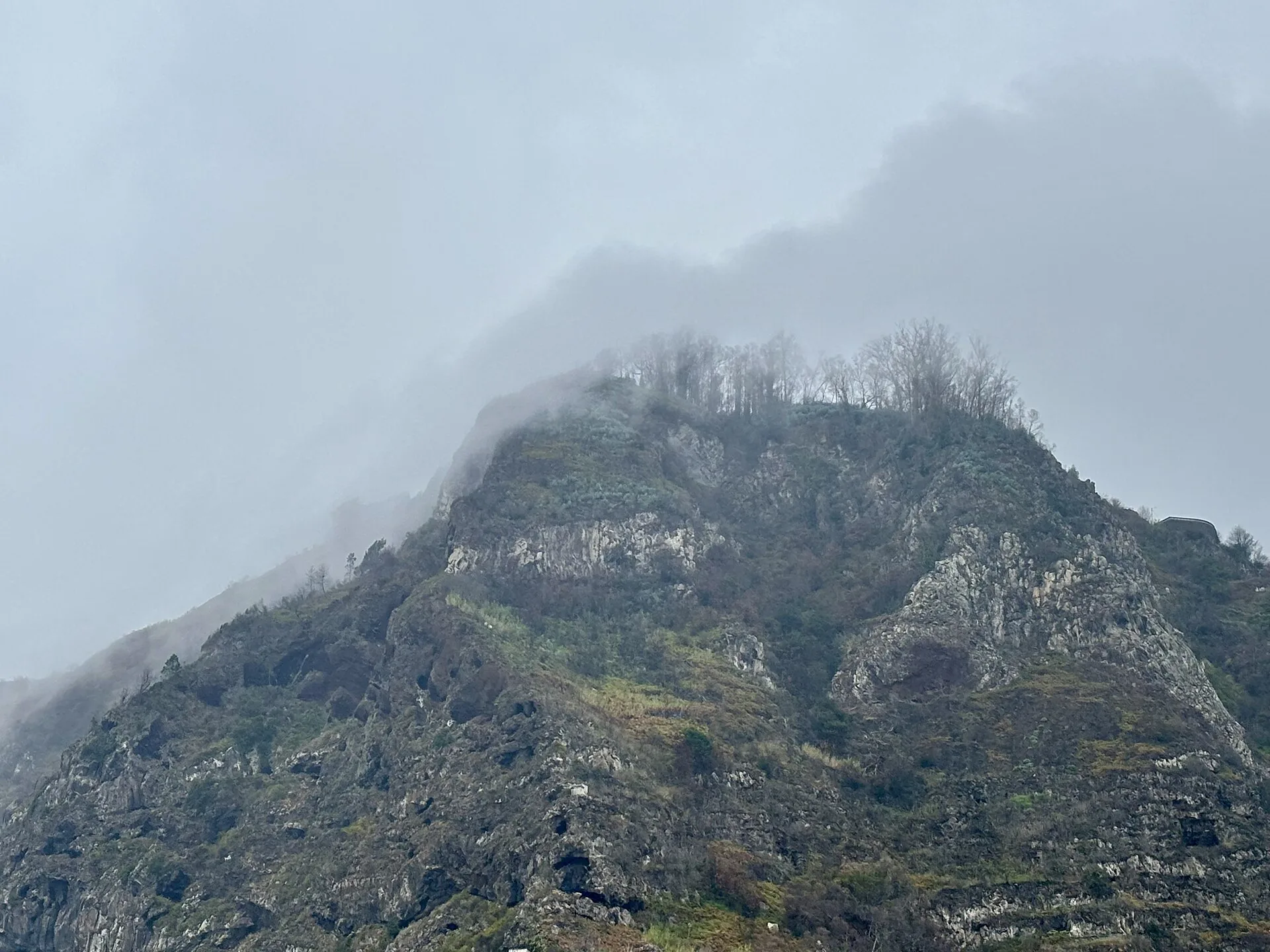
The report states that the highest total monthly rainfall was recorded at Chão do Areeiro, with 244.6 mm. However, the highest daily rainfall occurred at Pico do Areeiro, which registered 61.2 mm on 12 November. When compared with the 1961–1990 climatological normal for November, only Porto Santo/Airport showed a positive anomaly, at +22.4 mm; all other stations showed negative anomalies, especially Chão do Areeiro (–205.3 mm) and Santo da Serra (–181.2 mm).
The number of precipitation days also varied considerably. Santo da Serra had the highest number of days with precipitation equal to or above 0.1 mm, reaching 23 days. The highest number of rain days, defined in the report as days with precipitation equal to or above 1.0 mm, was seen at Chão do Areeiro, with 16 days. Meanwhile, Pico do Areeiro recorded 8 very rainy days, with precipitation equal to or above 10 mm.
Humidity, wind and sunshine
Monthly average relative humidity ranged from 64%, observed at Funchal/Observatory, Quinta Grande and Lugar de Baixo, to 92% at Santo da Serra. The lowest daily value was 7%, recorded at Pico do Areeiro on 2 November and 25 November. The highest daily value was 100%, observed at nine stations on different days during the month.
For wind, among the stations equipped with an anemometer, the strongest mean wind was measured at Selvagem Grande, at 28.6 km/h, while the lowest mean was recorded at Monte, at 4.6 km/h. The month’s highest gust reached 147 km/h at Santa Catarina/Airport on 13 November.
In terms of sunshine, Funchal/Observatory recorded a total of 178.7 hours of bright sunshine during the month, above the climatological normal of 151.7 hours. Santa Catarina/Airport logged 166.8 hours, and Porto Santo/Airport recorded 159.0 hours, also above the normal of 146.3 hours.
Sea-water temperature
At sea level, the average sea-water temperature measured at Molhe da Pontinha (Funchal) was 21.9 °C, which is 1.0 °C above the climatological normal for November. The highest daily average sea temperature was recorded on 3 November, at 22.8 °C, while the lowest values, 21.2 °C, were observed on 27, 28 and 29 November.
What the month looked like in practice
Based only on the supplied sources, November 2025 in Madeira can be described as a warmer-than-normal month, with warm coastal conditions, colder mountain stations, periods of heavy rainfall at higher elevations, high humidity in some areas, and strong wind gusts in exposed places. The available material does not provide a multi-year November average for Madeira as a whole, so this article summarises only the verified values for the reported month.