
Introduction
Talking about the beaches on Madeira Island starts with the island’s geography. Madeira belongs to a volcanic archipelago, and Madeira Island itself is the emerged part of a large volcanic edifice. That setting helps explain why the shoreline is generally steep, rocky, and broken up, rather than forming long coastal plains.
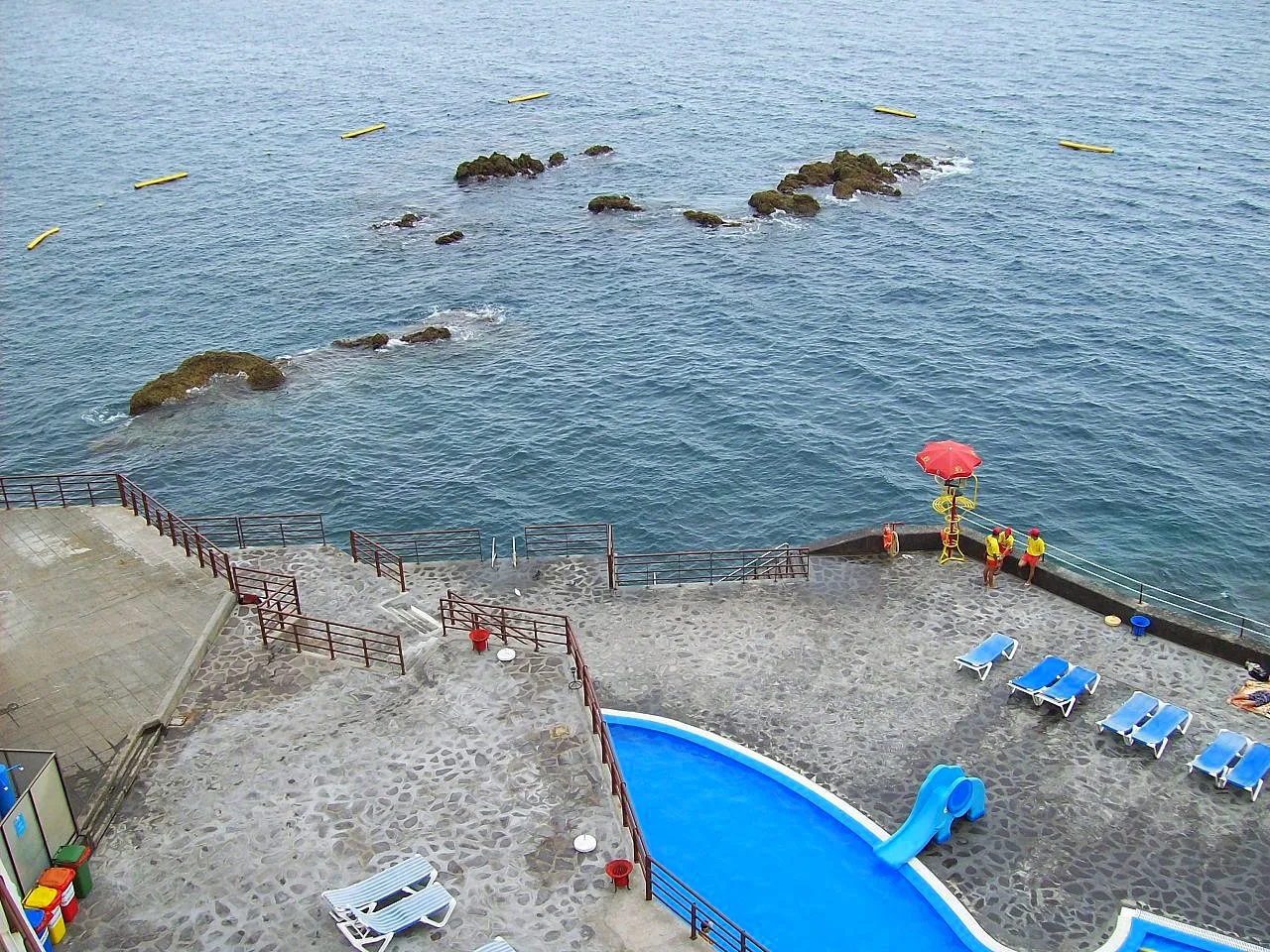
In practical terms, this means Madeira rarely matches the classic image of a long continuous sandy beach. Instead, the island offers a sequence of coves, small bays, urban bathing areas, and beaches that differ markedly from one another. Some are pebble beaches, some combine pebbles with dark sand, and others rely on natural or imported sand to create more comfortable seaside spaces.
A coastline shaped by volcanism
One of the island’s defining features is the close relationship between mountain and sea. The ocean often meets cliffs, steep slopes, and rocky outcrops, which limits the formation of broad natural sandy beaches. The shoreline should therefore be understood as a collection of different coastal solutions rather than as a single uniform beach belt.
This is also why it makes sense to speak of “Madeira beaches” in the plural. Relief, sediment type, and shoreline form all shape how each beach works. In some places the beach is small and natural; in others it has been adapted through human intervention to make access to the sea and recreational use easier.
Pebble beaches: the island’s most familiar shoreline
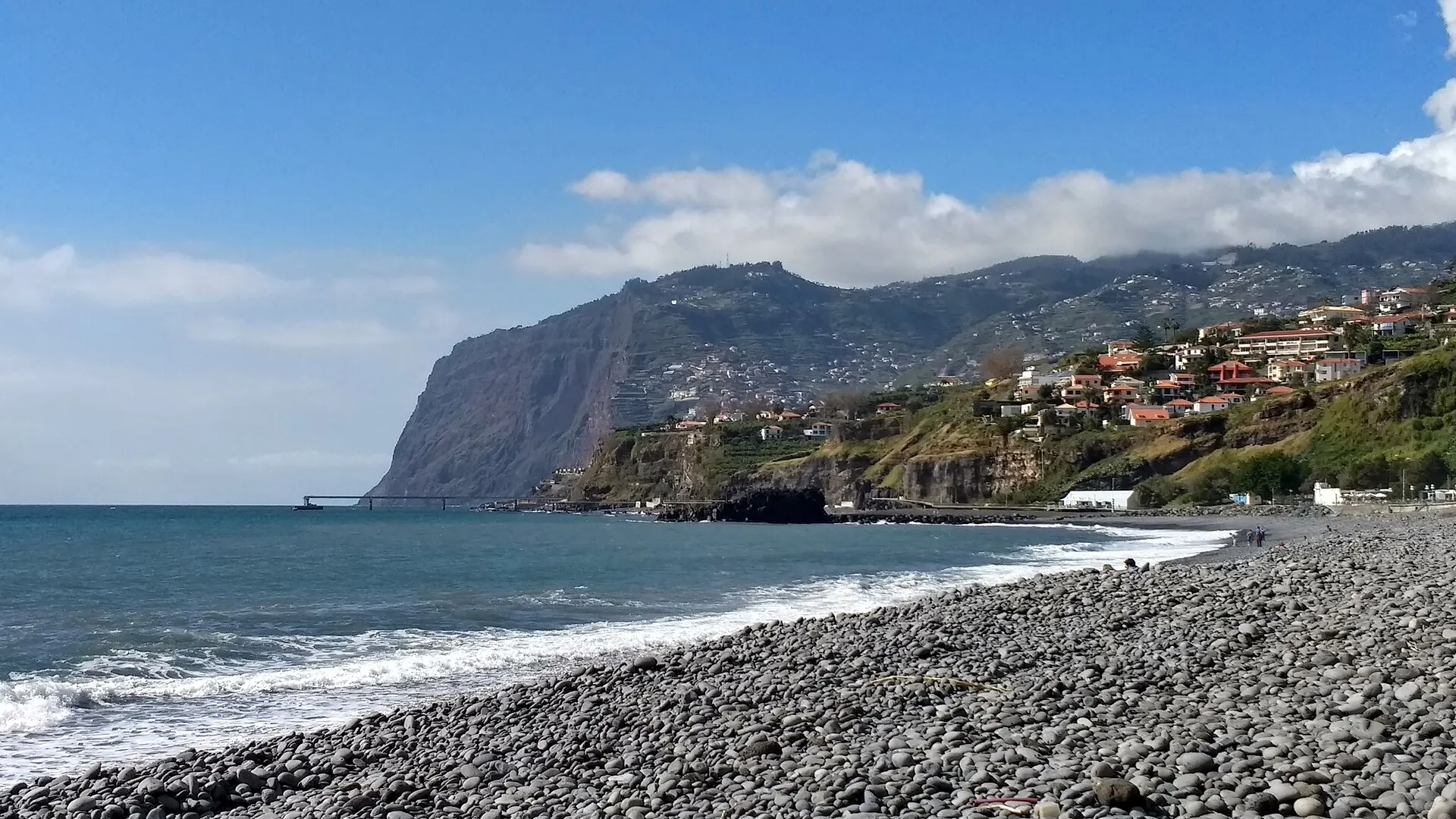
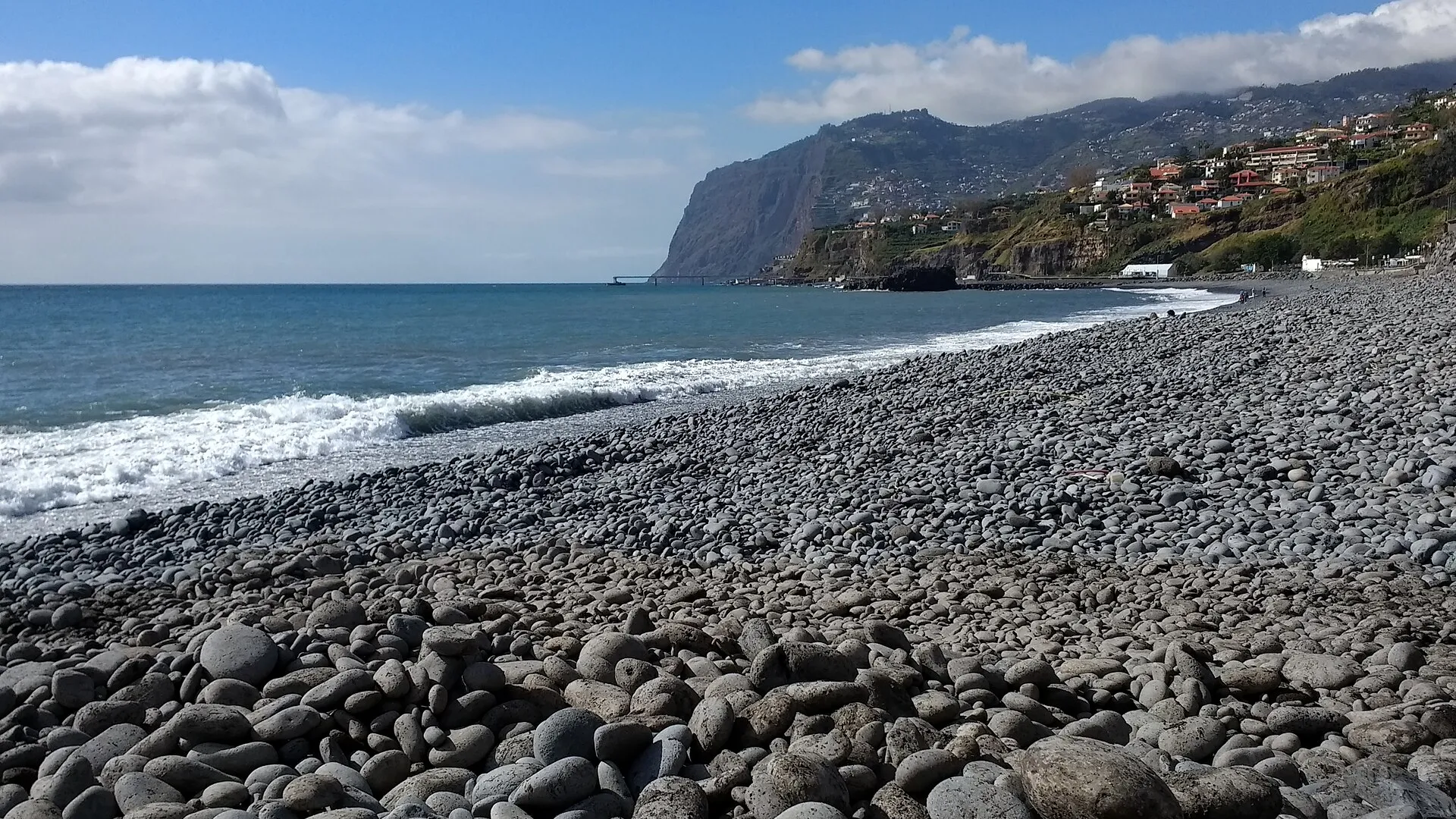
Pebble beaches are the beach type most closely associated with Madeira. The region’s official tourism information identifies black pebble beaches as predominant across the island, creating a coastal landscape that is strongly shaped by the contrast between dark rock and clear Atlantic water.
One of the best-known examples is Praia Formosa in Funchal. It is officially described as the largest public beach on Madeira Island and as a complex made up of four beaches. It stretches for about two kilometres and combines rounded pebbles with areas of black sand. Because it sits relatively close to the city centre, it has become one of the island’s most popular bathing areas.
Praia Formosa shows particularly well how Madeira connects city and sea. It is not only a place for swimming, but also a place to walk, linger, and move directly from the urban waterfront to the shoreline. For many visitors, it is one of the best introductions to the island’s most characteristic beach setting.
Sandy beaches: fewer, but highly important
Although pebbles dominate the island’s beach image, Madeira also has sandy beaches that are important both locally and for tourism. In some places the sand is natural and volcanic in origin; in others, it has been imported to create more comfortable and protected bathing areas.
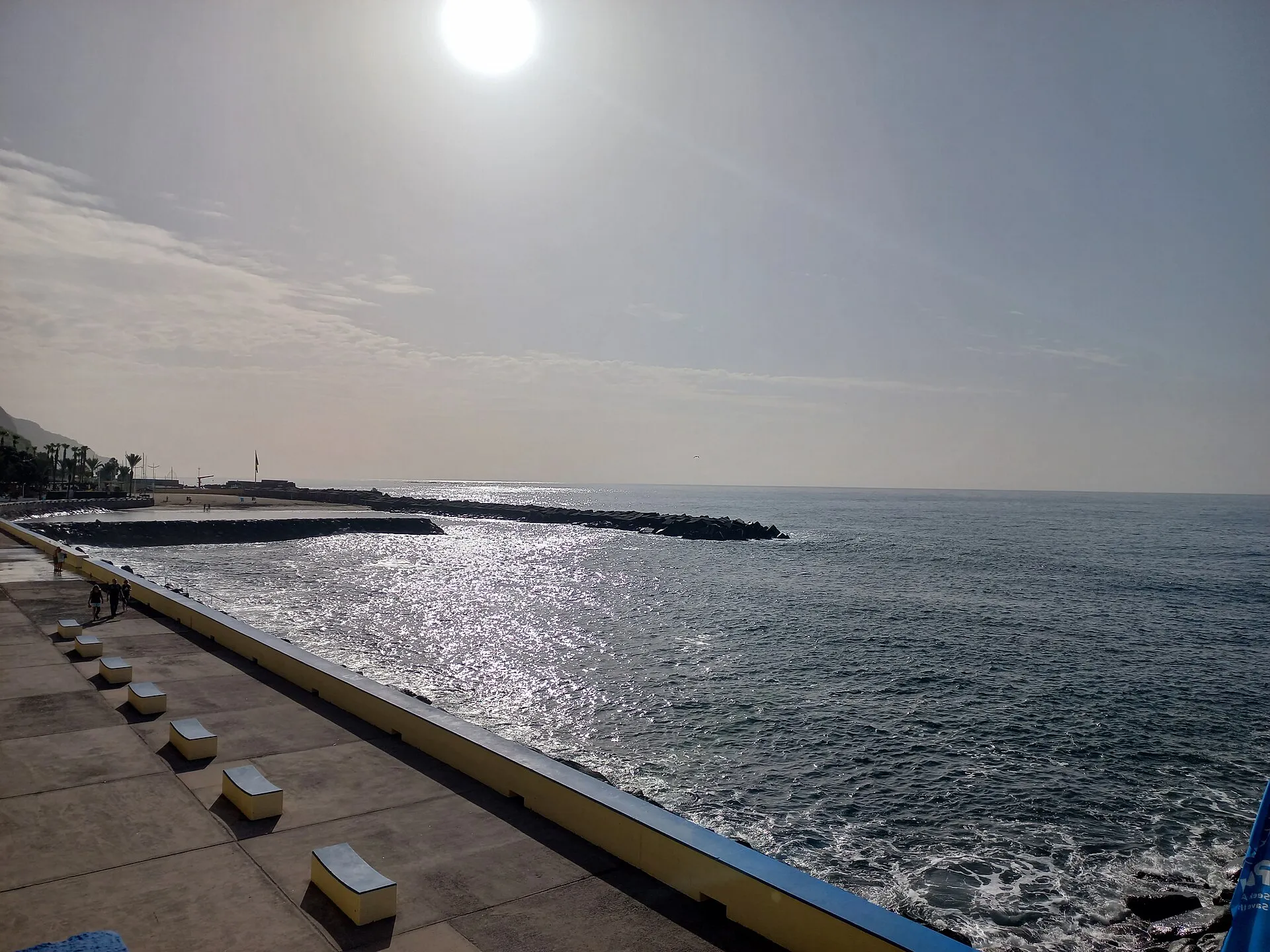
Calheta is one of the clearest examples of imported sand. Calheta Sand Beach opened in 2004 and became Madeira’s first artificial beach, using golden sand imported from Morocco. Today it is one of the most popular bathing resorts on the island’s west coast and a good example of how human intervention has helped respond to the scarcity of extensive sandy shorelines.
Machico also has an imported-sand beach in its bay. This created a sandy bathing area in a coastal setting where that type of beach is less common. Like Calheta, Machico demonstrates that on Madeira a sandy beach can be the result of deliberate planning rather than only of natural sediment accumulation.
There are also beaches with natural volcanic sand. Prainha in Caniçal is one of the strongest examples. Official tourism sources describe it as a natural sand beach with coppery tones, and stress how it stands out from the majority of the island’s pebble beaches. Its more arid setting further adds to its distinct character.
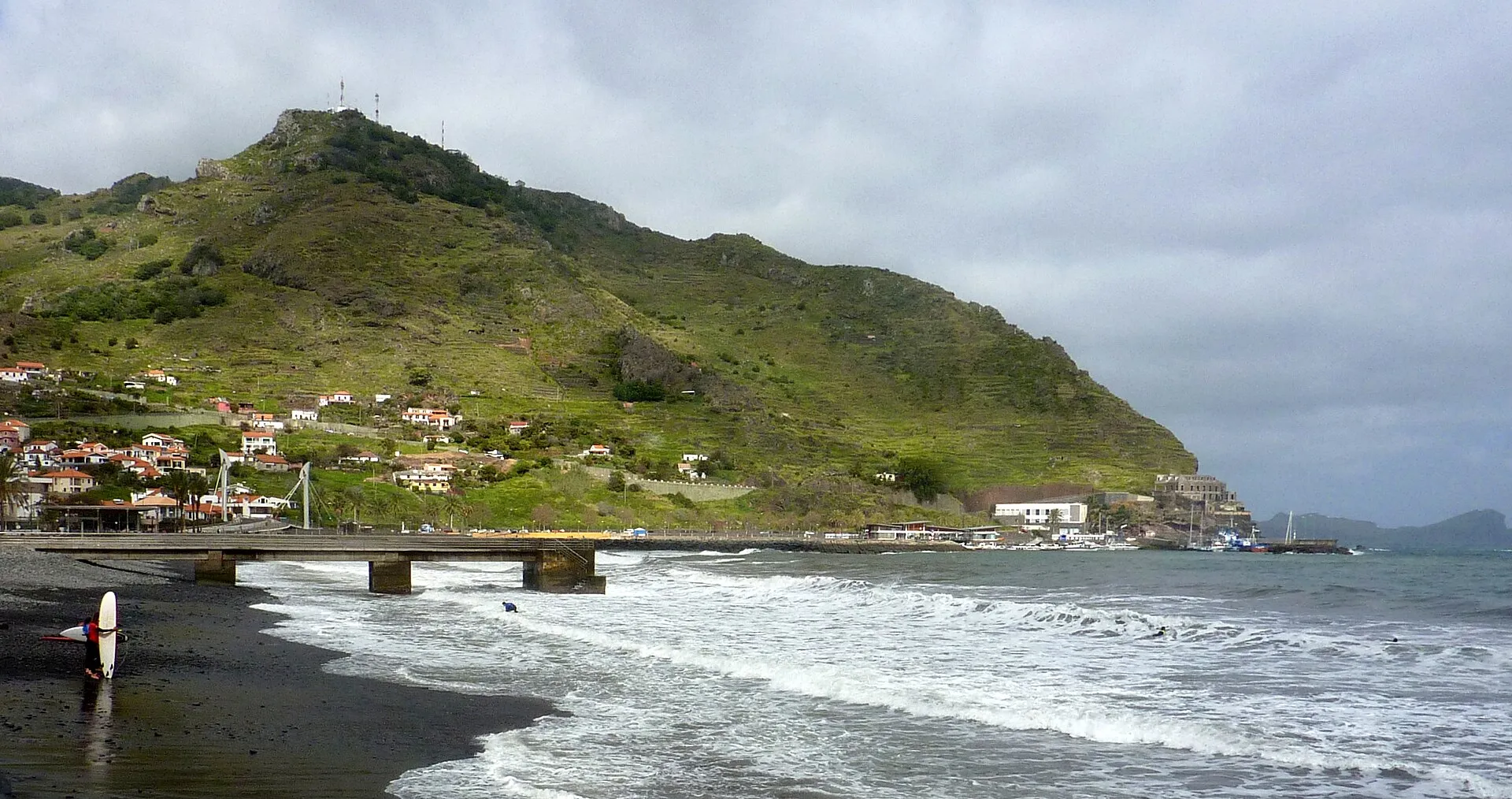
Maiata Beach in Porto da Cruz is another distinctive case. The key feature here is the mix of black sand and pebbles, together with favourable conditions for surfing. Madeira’s northeast coast is known for offering strong conditions for several water sports, and Maiata is one of the area’s reference points in that context.
How beach-going is experienced on Madeira
The beach experience on Madeira depends very much on what kind of setting a visitor wants. Some people choose Praia Formosa for its proximity to Funchal and its easy access. Others prefer Calheta or Machico because they want a sandier beach. Others are drawn to Prainha for its volcanic sand and more arid scenery, or to Maiata for its surf-oriented atmosphere and wave action.
For that reason, Madeira should not be read as a uniform beach destination. It is instead an Atlantic island where sea and mountain are extremely close together. The appeal of its beaches lies precisely in that diversity: rounded pebbles, black sand, copper-coloured natural sand, imported sand, and small coves shaped by volcanic relief.
Madeira and Porto Santo: two very different beach landscapes
One of the most common points of confusion for visitors is mixing up Madeira Island with Porto Santo. Although they belong to the same archipelago, the two islands offer very different seaside experiences. Porto Santo is presented as the golden island, famous for its nine-kilometre sandy beach. Madeira, by contrast, is the mountainous island, with a deeply indented coast and a strong predominance of pebble beaches.
That difference is essential when planning a visit. If the aim is to find a long, continuous sandy strand, Porto Santo is the main reference in the archipelago. If the goal is to experience a steeper coastline with short beaches, occasional sandy areas, and a wider range of ways to use the sea, Madeira is the better match. The two islands complement one another, but they do not offer the same coastline.
A practical reading for visitors
For visitors, it helps to think of Madeira’s beaches as part of a broader coastal system. Their value does not depend only on whether they are sandy or pebbly, but also on the landscape around them, how easy they are to access, and the way relief shapes each space. Some beaches are urban and highly accessible; others are smaller and more secluded; others are notable for geological or sporting reasons.
It is this combination of geology, relief, and human adaptation that makes Madeira’s beaches so distinctive. The island does not offer a single beach image, but several. There are pebble beaches that define its more traditional coastal look, imported-sand beaches that broaden bathing options, and natural-sand beaches that reveal specific local nuances. Together, they show that Madeira is less a classic beach destination and more a varied coastal territory in which each bay tells a different story.