
Overview
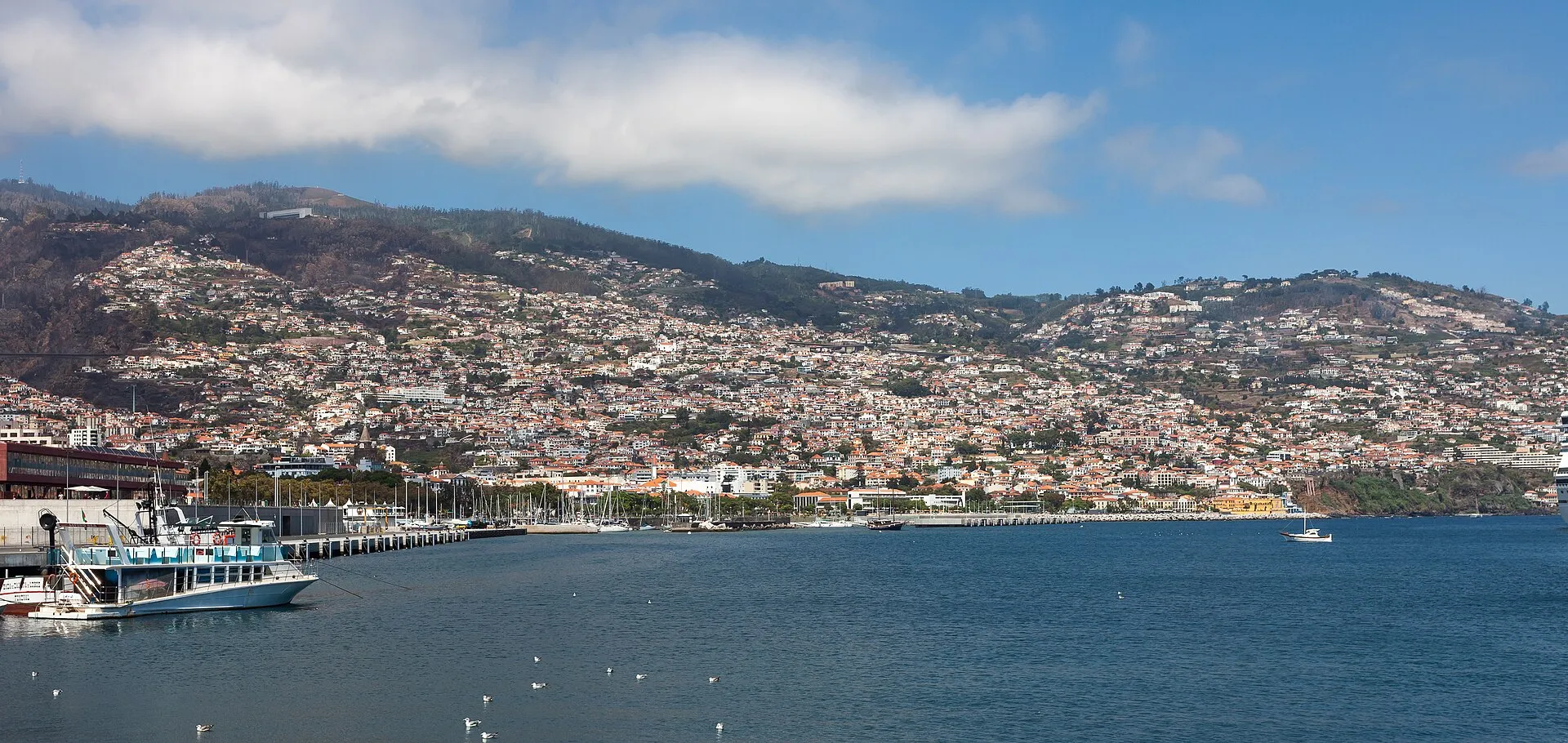
The Madeira Botanical Garden / Eng.º Rui Vieira is a botanical garden in Funchal, in the parish of Santa Maria Maior. It belongs to the Autonomous Region of Madeira and is integrated into the Institute of Forestry and Nature Conservation, IP-RAM. According to official information, it covers about 8 hectares in total, with roughly 5 hectares landscaped, and is located about 3 km from the city centre, on the upper left bank of the João Gomes stream, between 150 and 300 metres above sea level. This hillside setting helps explain why a visit combines botanical interpretation, walking routes, and wide views over the city.
The garden is therefore more than a simple public green space. Its public role is matched by a scientific and educational mission, and its relationship with Funchal’s amphitheatre-like urban landscape is part of the experience. The official name also distinguishes it from other gardens in the city and identifies it as the capital’s main botanical institution.
Origins and historical background
Official sources state that the idea of creating a botanical garden in Madeira had been desired since at least the 17th century. That ambition became reality in 1960, in Funchal, when the Madeira Botanical Garden was formally created and opened to the public. Its origin is therefore tied to a long-standing wish to gather, study, and present plants from different regions in one place.
The garden was established on Quinta do Bom Sucesso, a property associated with the Reid family and founded in 1881. This historical context matters because it places the garden within Madeira’s tradition of landscaped estates with strong scenic value. At the same time, the botanical institution differs from a purely historic estate because it was conceived from the outset as a facility for documentation, conservation, and scientific communication.
Plant collections and spatial organisation
According to official information, the garden brings together about 3,000 plant species from ecologically distinct regions of the world. Along the paths, plants are identified by scientific name, common name, family, and place of origin, which reinforces the educational value of the visit. The space is organised through several thematic areas and a clear botanical reading of the site, making it useful both for casual visitors and for people seeking more detailed observation.
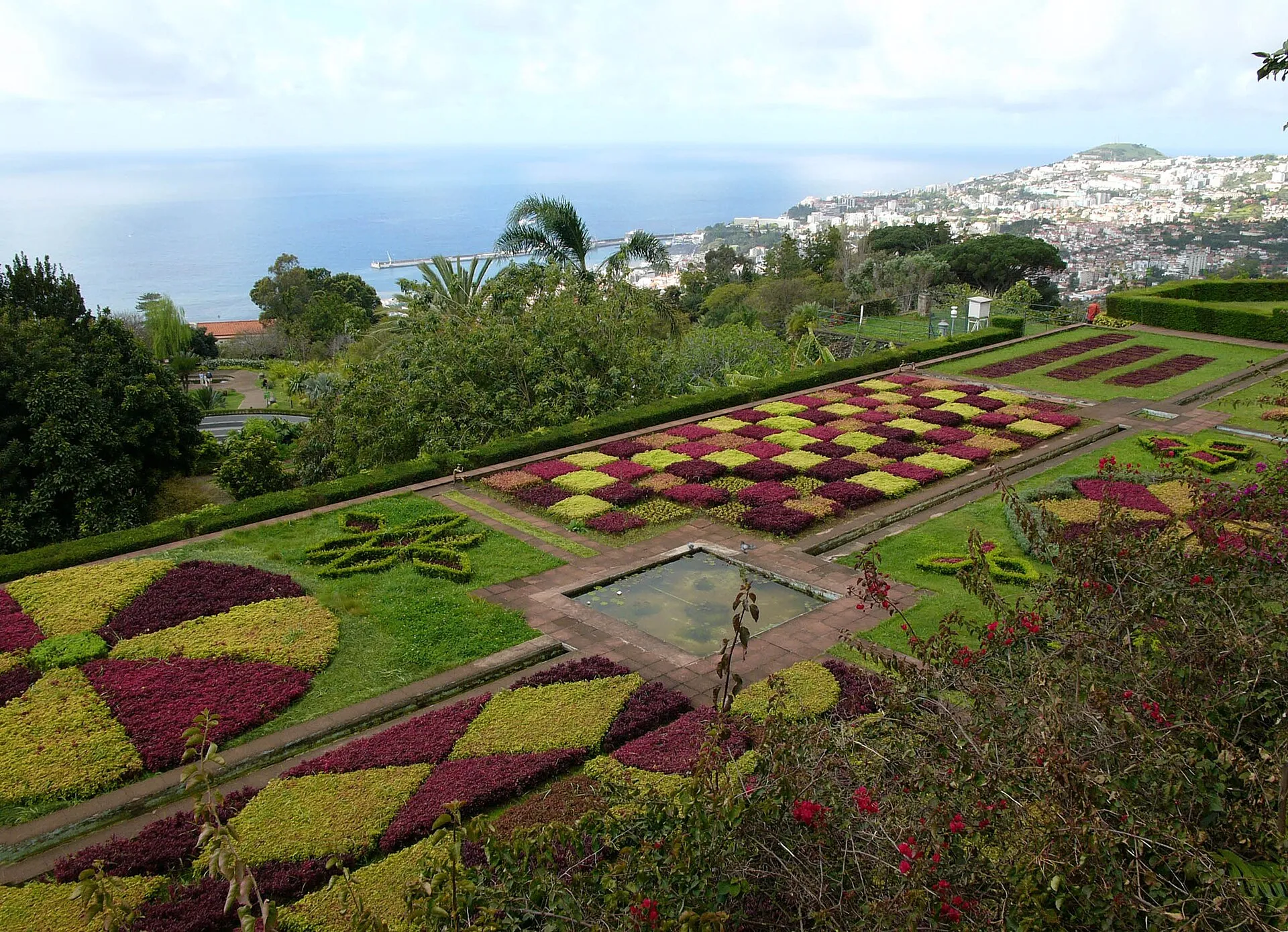
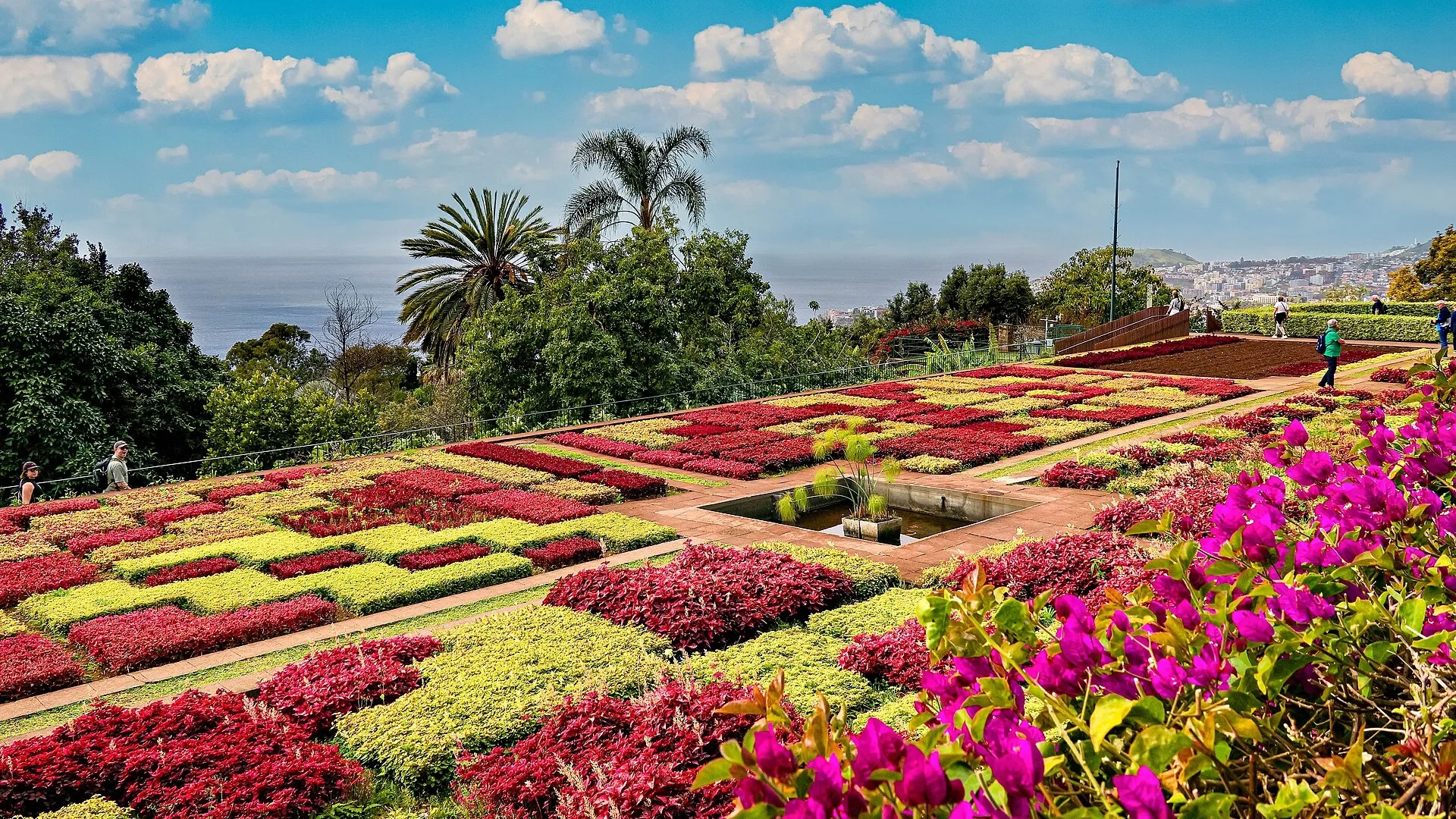
Among the highlighted collections are Madeiran endemic species, an arboretum, succulents, choreographed gardens and topiary, industrial crops, aromatic and medicinal plants, palms and cycads, as well as landscaped areas with ornamental and display functions. This diversity shows that the garden was not designed only as an aesthetic showcase: it also aims to compare origins, growth forms, and ecological adaptations across several continents.
The presence of Madeiran endemic species is especially significant because it connects the garden to the archipelago’s own flora. In parallel, the exotic species and thematic beds help place island vegetation within a broader frame, making it possible to understand the relationship between local plant life and global botanical diversity. This combination is one of the reasons the garden is often read as a place of environmental education and landscape interpretation.
Herbarium and Natural History Museum
One of the garden’s most important features is its link to scientific documentation. The herbarium is officially described as a dynamic collection of dried and pressed plants. Such collections support identification, nomenclature, classification, systematics, geographic distribution, and ecological study of plant species.
The same complex also contains the Natural History Museum of the Botanical Garden, located at Quinta do Bom Sucesso and surrounded by the garden. The museum displays fossils, minerals, insects, vertebrates, and preserved invertebrates, along with endemic species and other specimens connected to typical island flora. The relationship between garden, herbarium, and museum confirms the site’s role as a place for research, teaching, and conservation, in addition to public visitation.
Visiting experience and landscape reading
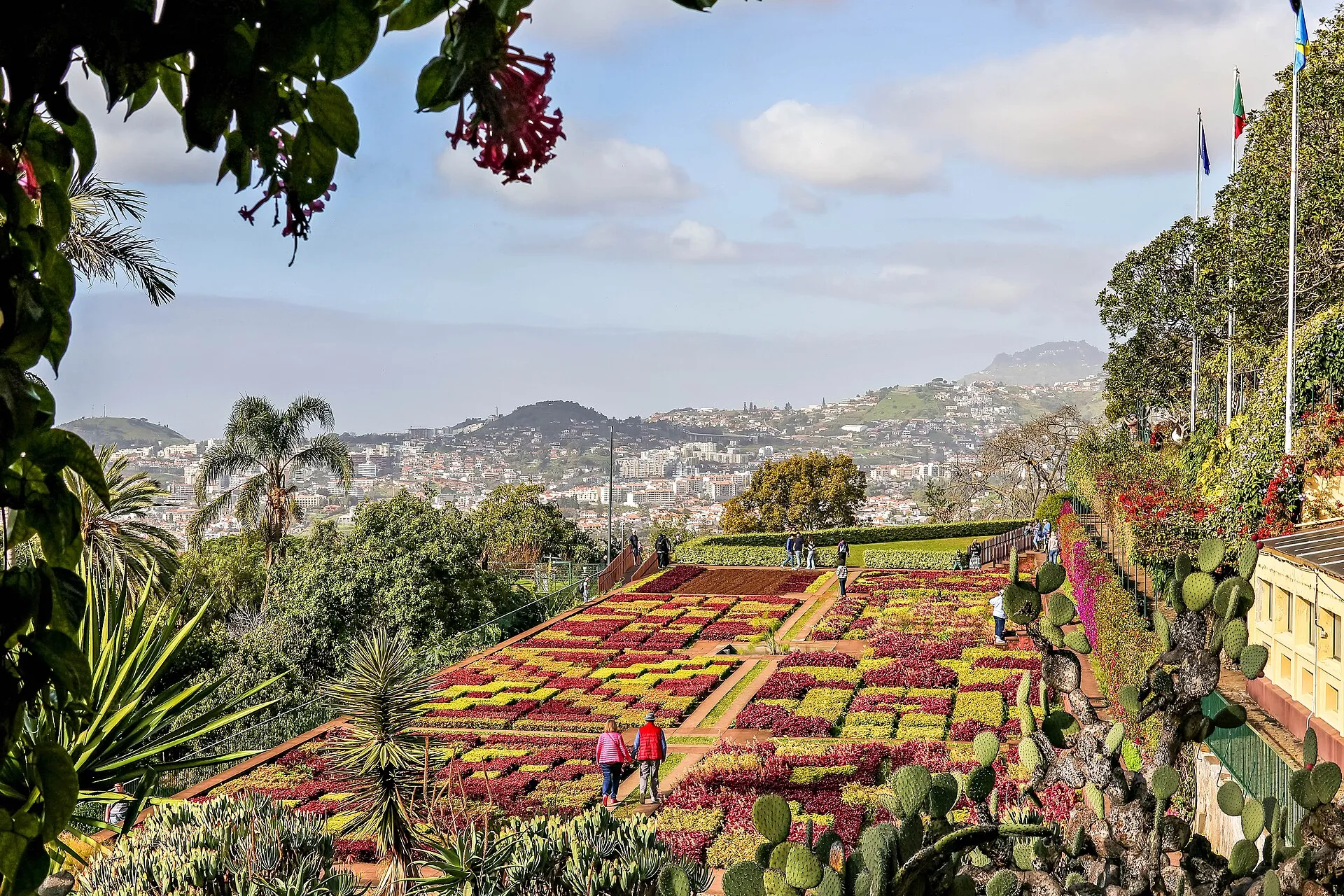
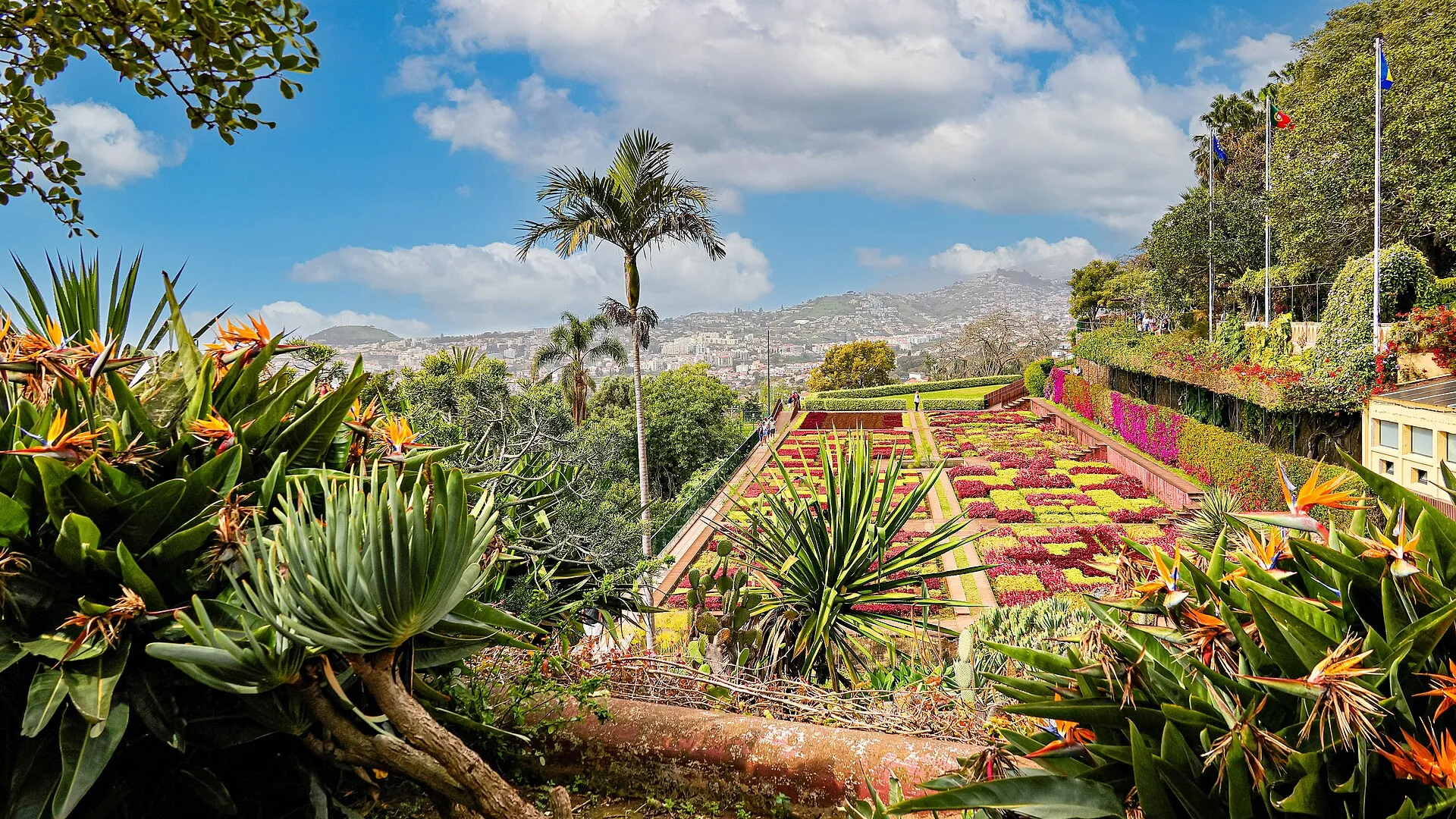
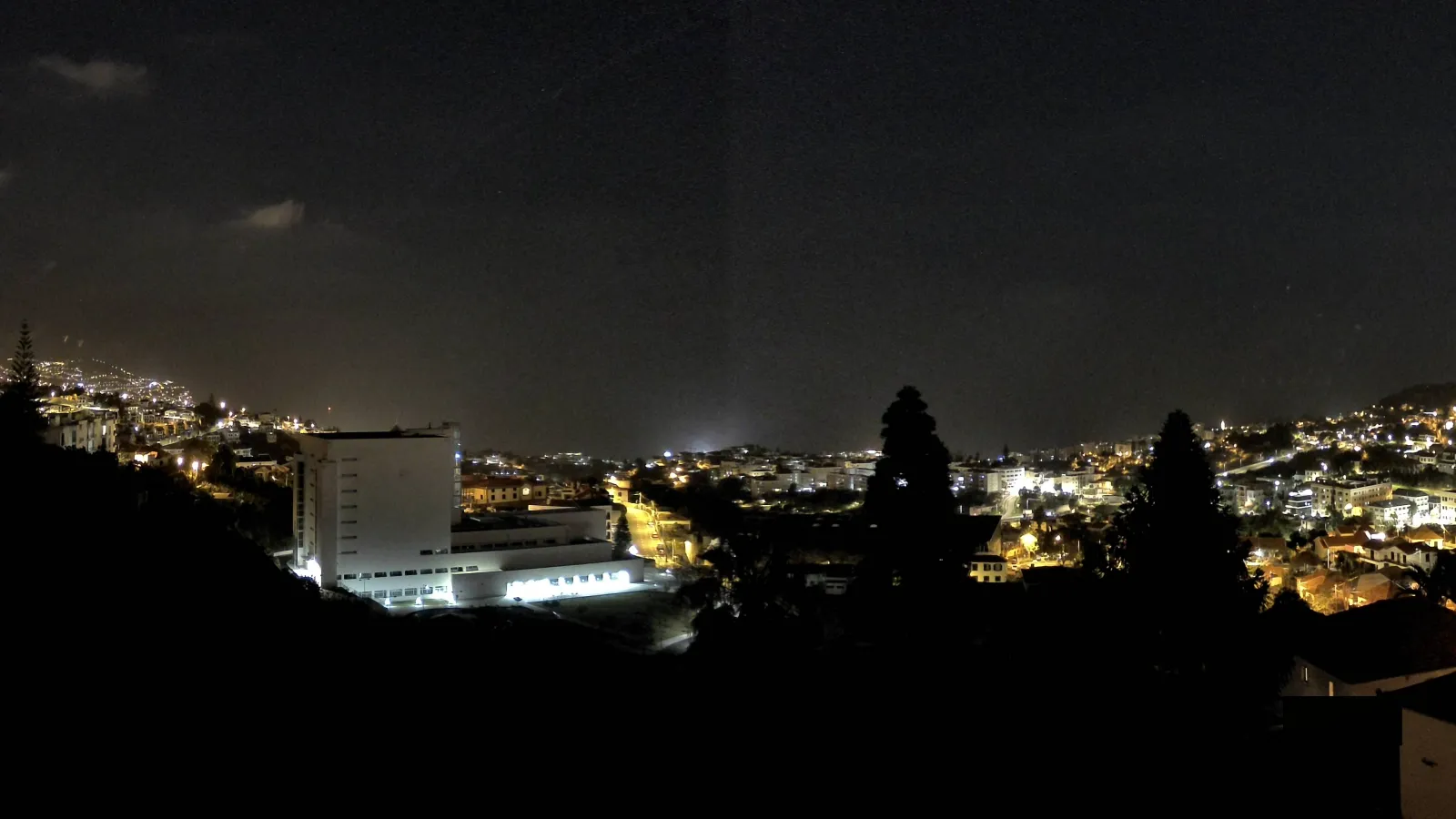
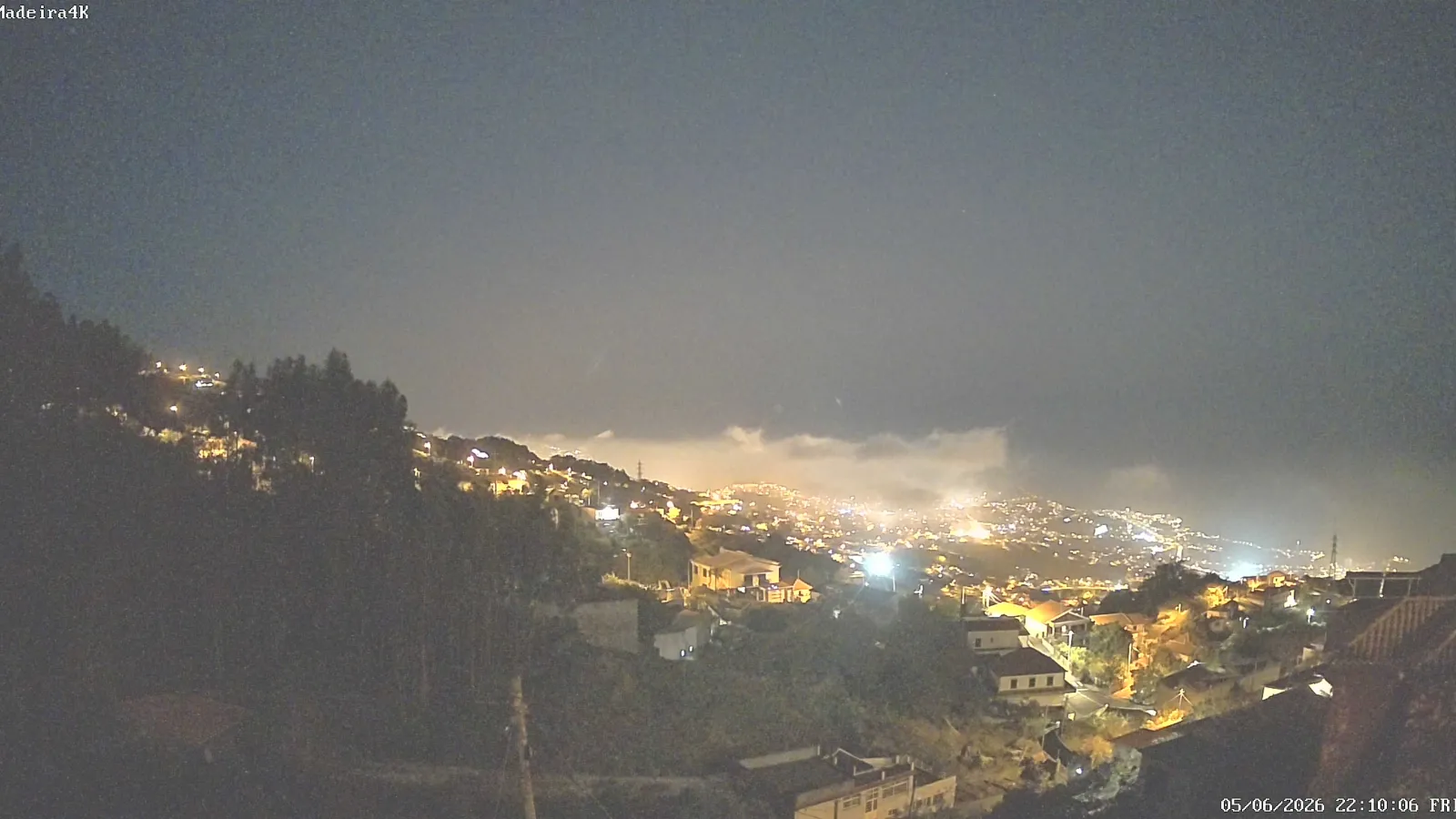
In practice, the visit is shaped as much by botany as by scenery. The view over Funchal, described by official tourism information as a panoramic view over the city’s amphitheatre, is part of the place’s identity. The route unfolds across terraces and landscaped sections adapted to the slope, creating an experience in which plant collections and the urban panorama reinforce each other.
That panoramic character helps explain why the garden is often understood as a specialised viewpoint rather than only a plant collection. For visitors, the relationship between the city, the bay, the mountain, and the vegetation is part of how the site is read. In Madeira, this blending of landscape and ornamental cultivation has a long tradition, and the garden condenses it into an institutional setting with a clear scientific mission.
Practical information and access
According to the official sources consulted, the garden is open daily except on Christmas Day. The indicated opening hours are 9:00 a.m. to 6:00 p.m., with ticket sales ending at 5:30 p.m. The official pages also state that access is possible by car, taxi, cable car, and by public buses serving the area.
The same sources add a useful note on internal circulation: the paths often include stairs and are not prepared for wheelchairs. In a hillside garden, that limitation is important because it affects how the visit should be planned and helps explain why the terrain is such a strong part of the experience.
Cultural significance
The Madeira Botanical Garden occupies a distinctive place in Funchal because it brings together botanical collection, conservation, science, and landscape in one setting. Unlike a merely ornamental garden, it functions as a site for studying and interpreting flora while also offering one of the city’s best-known viewpoints. That dual vocation — scientific and scenic — lies at the heart of its cultural importance.
To understand the garden in the Madeiran context, it is helpful to see it as part of a broader tradition of historic estates and public gardens, but with its own institutional role. The scale of the collections, the presence of the herbarium and museum, and the position facing Funchal’s amphitheatre make it a reference point for anyone wishing to understand the relationship between the city, the island’s climate, and Madeira’s botanical culture.