
Overview
The Funchal Cable Car is one of the most distinctive ways to travel from the lower part of the city up to Monte on the island of Madeira. The line crosses Funchal’s eastern hillside and has become both a practical transport link and a much-loved panoramic experience. For first-time visitors, it immediately clarifies the city’s geography: a narrow coastal strip at sea level, steep slopes rising quickly above it, and Monte higher up, an area associated with gardens, viewpoints and religious heritage.
Madeira Cable Car presents the system as the link between the old part of Funchal and Monte, while Madeira’s official tourism board describes it as an essential visitor activity on the island. That dual role — transport and attraction — is central to its appeal. The ride is not just about getting uphill; it is also about understanding the city from above, with sea, rooftops and mountain landscape unfolding together in one sequence.
The route and its urban setting
The journey between Funchal and Monte is about 3.2 kilometres long and overcomes a height difference of around 560 metres. The Tourism of Madeira says the trip takes about 15 minutes, while Madeira Cable Car describes it as taking roughly 15 to 18 minutes. In either case, it is a short ascent in time, but a dramatic one in terms of topography and scenery.
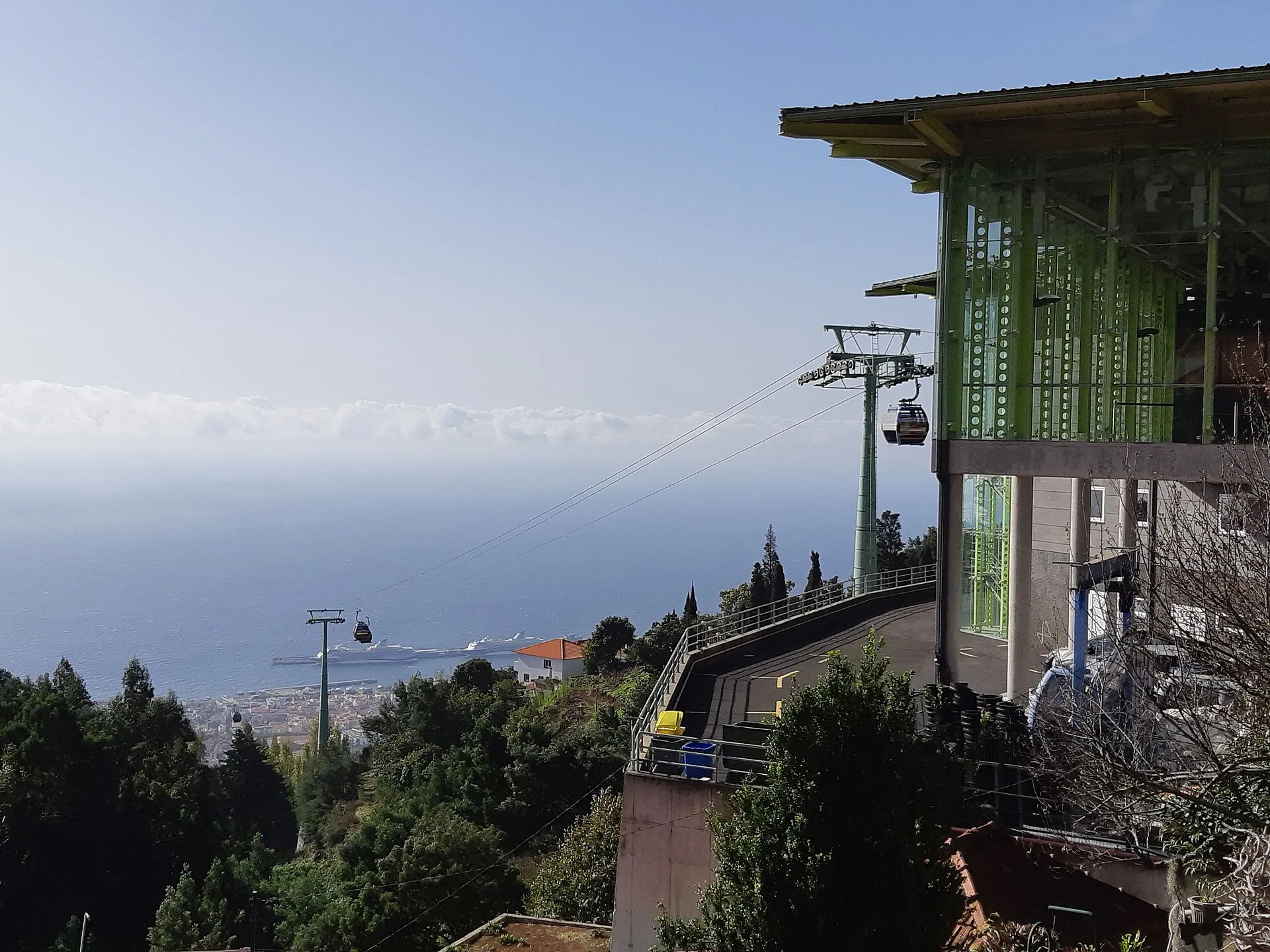
Along the route, the cabins pass above neighbourhoods, gardens and wooded slopes, offering a very legible view of Funchal’s natural amphitheatre. The city developed along a relatively narrow coastal band, while Monte grew higher up, historically more detached from the lower urban centre. The cable car shortens that physical and symbolic distance, linking two places that have always been close on the map but separated by terrain.
That relationship between city and hillside is essential to understanding the cable car’s value. Down below, urban life clusters by the sea; above, the landscape becomes greener, higher and more open to the bay. The ride therefore works as a concise introduction to Funchal and to Madeira itself, an island where relief strongly shapes movement and the way people read the territory.
Installation characteristics
According to Madeira Cable Car and the Tourism of Madeira, the system has 39 cabins and can carry up to 800 passengers per hour. The official tourism source also states that the line is 3,200 metres long and that each cabin can hold 4 to 6 people. This capacity and configuration help explain how the cable car can combine a steady flow of visitors with an efficient transport function.
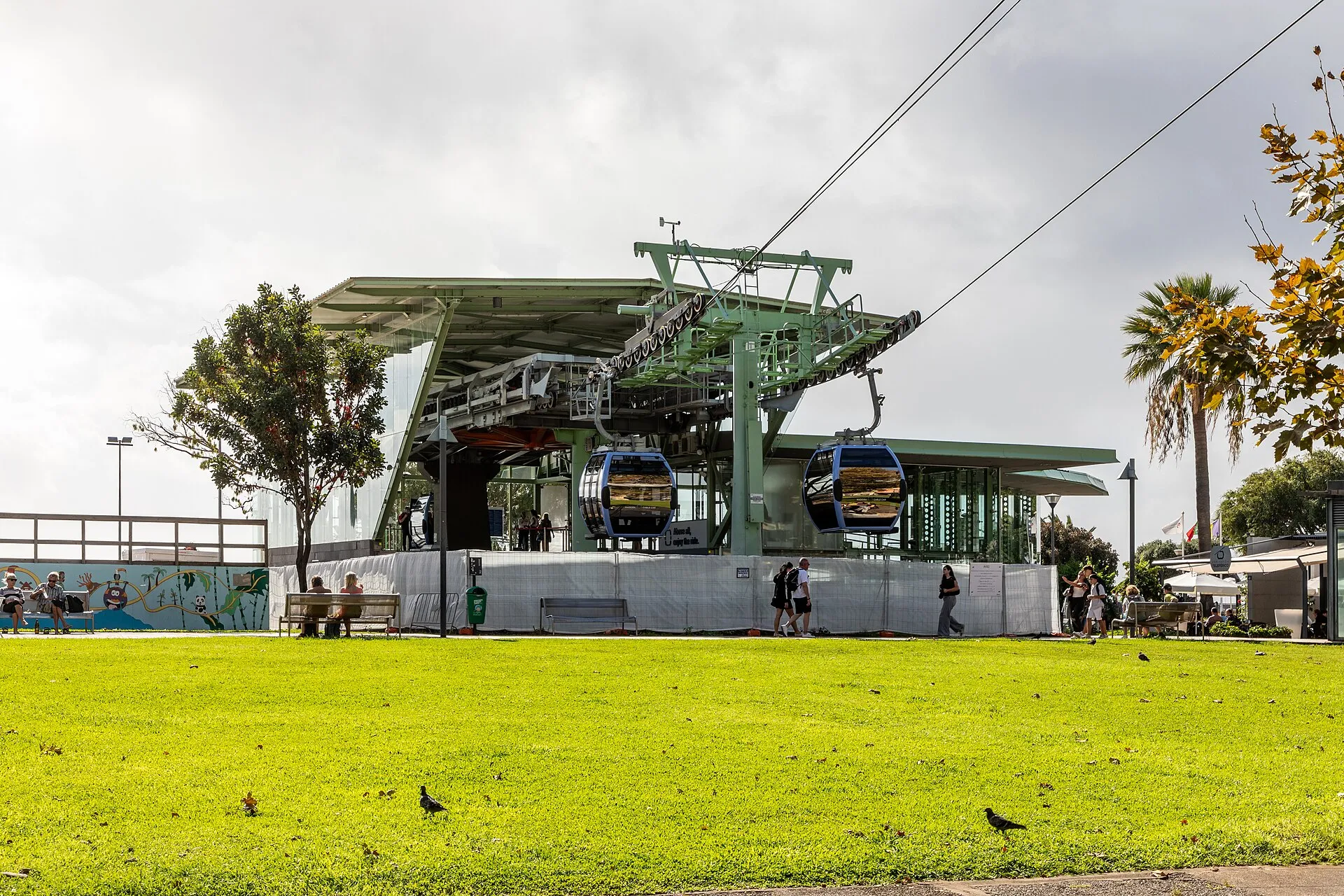
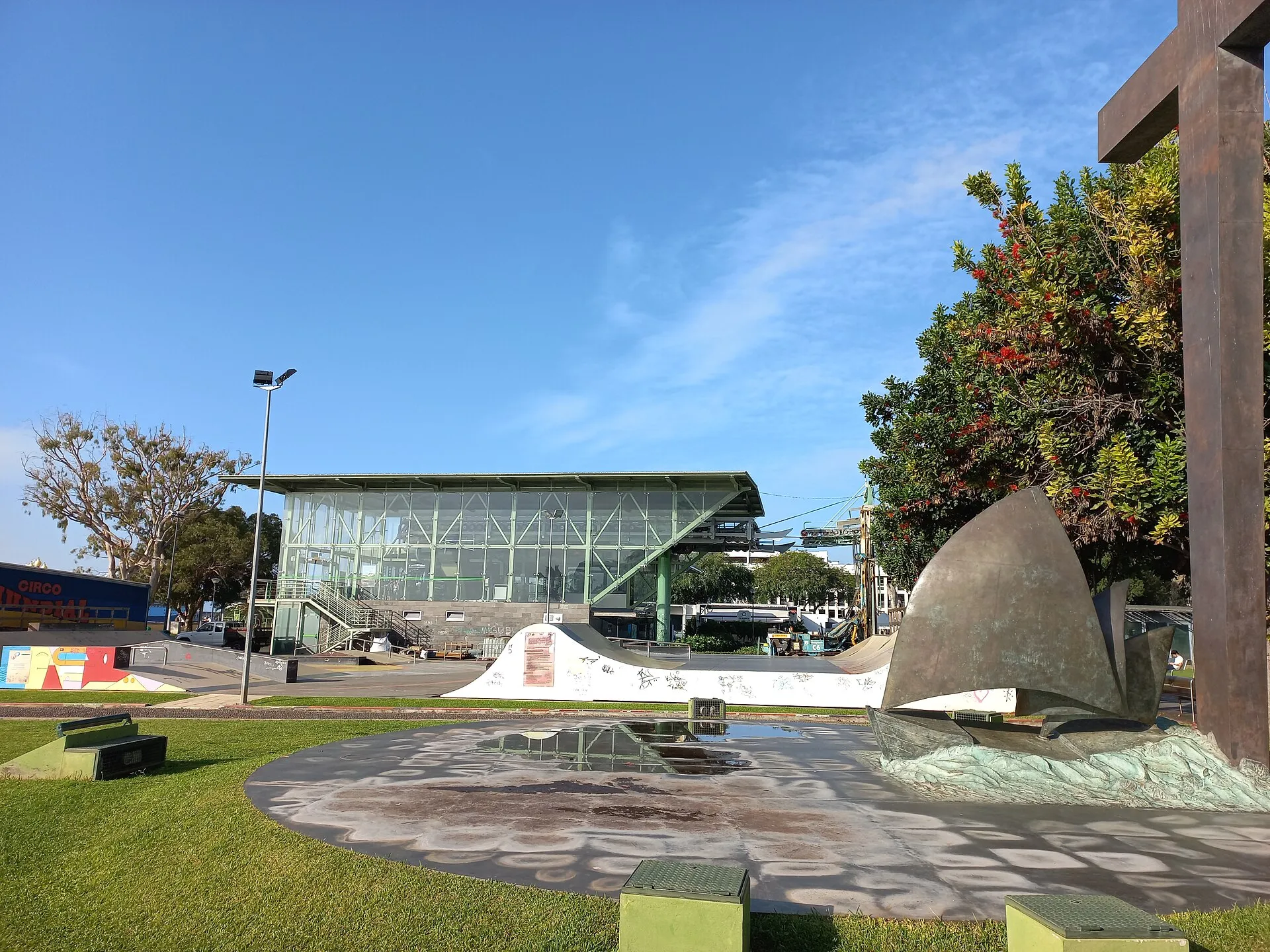
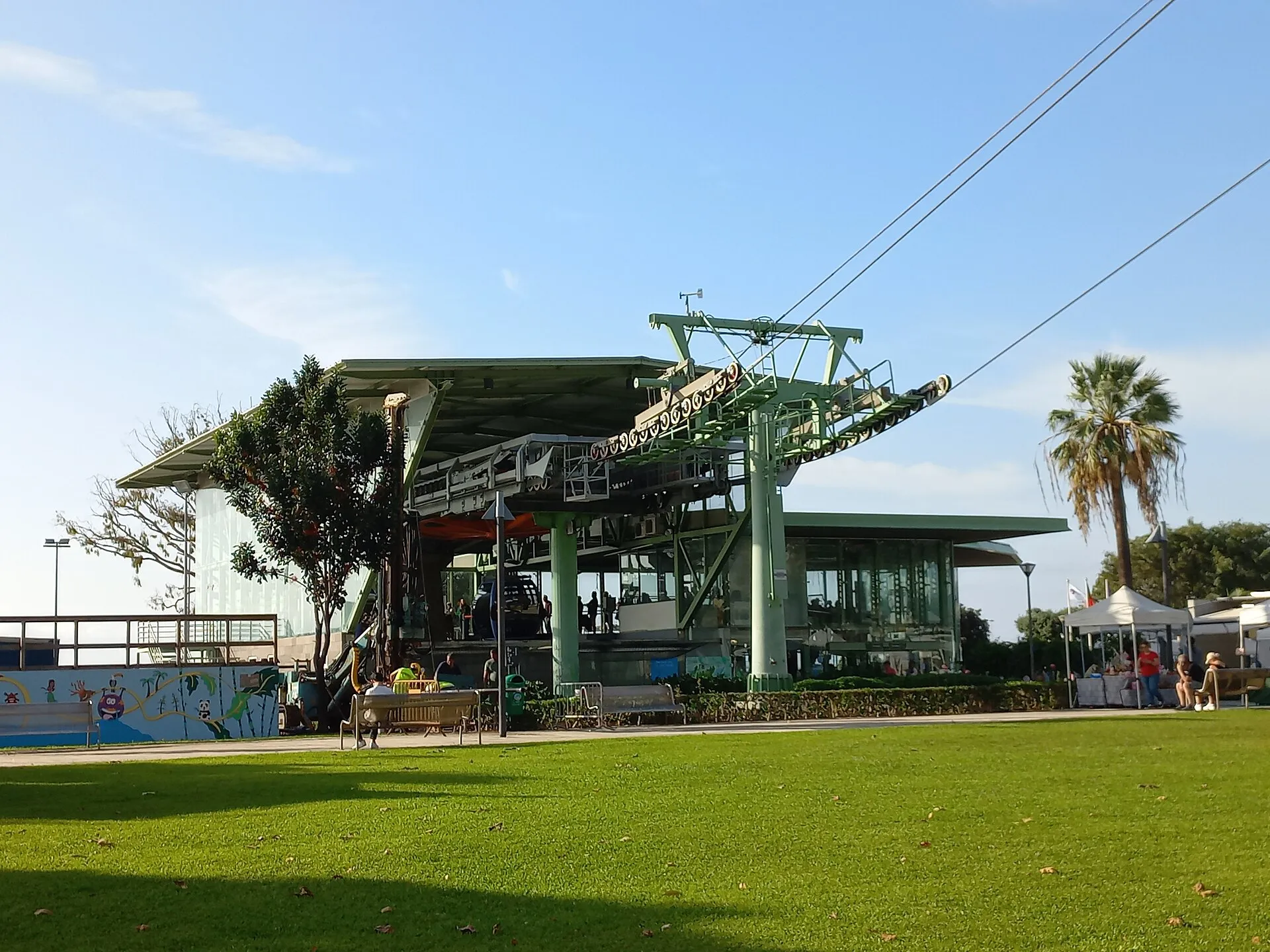
The lower station is in the Old Town area, near Jardim do Almirante Reis, and the upper station is in the Largo das Babosas area in Monte. That layout makes it easy to continue the visit on foot: once passengers arrive upstairs, they are already close to gardens, viewpoints and other attractions. For those returning to the city, the same line offers a quick and equally scenic descent.
Madeira Cable Car also states that tickets can be bought on its website or at either terminal. In practical terms, that makes the experience easy to fit into an urban itinerary, especially for visitors spending only a short time in Funchal and wanting to combine movement, views and access to Monte in a single outing.
Opening hours and use
At the time consulted, the cable car operates every day. The official information says it opens at 9:00 a.m. and runs until the last ride at 5:45 p.m., closing only on 25 December. That regular schedule helps make it an easy addition to a city walk, a visit to Monte or a wider sightseeing day in Madeira.
As with any transport service, however, hours can change for operational or weather-related reasons, so checking the official information close to travel time is still the safest approach. What matters most for visitors is that the service is designed for daily use and for smooth movement between the two ends of the line.
What it connects to in Monte
The cable car does not end at a simple arrival point; it ends in an area that opens the door to one of Funchal’s best-known districts. Madeira’s tourism board highlights that, once in Monte, visitors can explore tropical gardens, architectural and religious heritage, and even the famous wicker sledges. The fact that several attractions lie close to the upper station is one reason the cable car remains a classic part of a city itinerary.
Monte is associated with the higher elevations of Funchal and has a strong historical and visitor identity. The cable car’s connection there has a very clear function: it reduces the distance between the lower city and the upper district while also making the visit easier to understand. For many travellers, the route is interesting both for the destination and for the approach to it. The ascent gives context to what they will see in Monte and makes the whole experience more readable.
The option to continue on foot from the upper station also strengthens the experience. The cable car does not isolate the visitor; instead, it places them within a wider network of gardens, viewpoints and scenic routes that form part of Monte’s most recognisable image.
Historical background
Before the cable car, travel between central Funchal and Monte relied on other means, including a steam railway in the 20th century, according to the Tourism of Madeira. The cable car restored that uphill connection between the lower city and the parish above, but with technology designed to maximise panoramic views and fast access. In that sense, it is both a modern infrastructure and an updated continuation of an older urban link.
This historical dimension helps explain why the cable car is now seen as one of Funchal’s symbols. It brings together several layers of Madeira’s urban experience: the steep relief, the closeness of sea and mountain, the presence of historic districts and the strong connection between movement and observation. What may seem to many visitors like just a few minutes in a cabin becomes, in practice, a compact summary of the city in motion.
How to read the visit
For a first-time user, the cable car works almost like a moving viewpoint. It is not only a means of transportation; it is also a vantage point that slowly reveals the shape of Funchal as the cabin climbs or descends. The passenger can understand the relation between the waterfront, the compact urban fabric, the slopes and Monte’s higher elevation in a way that would be harder to grasp on foot, especially in a short visit.
That is one reason the cable car remains so popular. It offers a clear view of Madeira’s topography without demanding much physical effort, while still placing the traveller in direct contact with the landscape. The experience is brief, but not shallow: it organises the visitor’s reading of the city and makes it clear that, in Funchal, urban life and mountain terrain belong to the same lived landscape.
In short, the Funchal Cable Car to Monte is an important part of the city’s tourist mobility and a direct way to experience Madeira’s landscape. The value of the journey lies not only in reaching Monte, but in the crossing itself: a short, elevated and visually striking passage between the urban centre and one of the island’s most emblematic areas.